
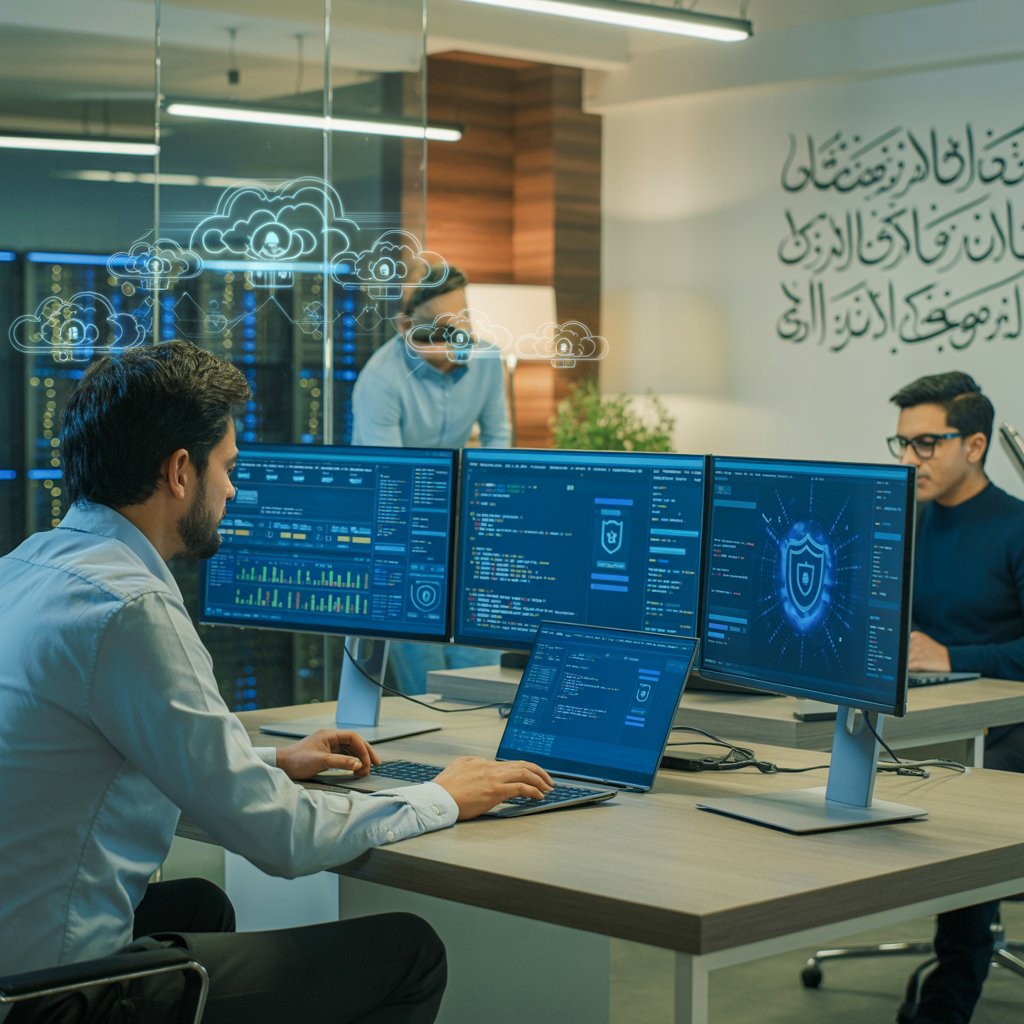
Introduction: The Rise of Managed IT Services in Pakistan
The technological revolution has redefined the way businesses function globally, and Pakistan is no different. The last decade has seen small and medium enterprises (SMEs) in Pakistan adopt technology to play on the global field. But with increasing dependence on technology comes a host of new challenges—data protection, system downtime, cyber attacks, and IT maintenance. This is where managed IT services come into play as a game-changer for Pakistani small businesses. Managed IT Services for Small Business in Pakistan
Managed IT services is the outsourcing of IT management and support functions of an organization to a third party. Rather than employing a full-time IT department, which can be expensive and difficult to maintain, companies engage a seasoned Managed Service Provider (MSP) that can do it all from network management to security.
In Pakistan, the requirement for managed IT services is expanding fast due to the necessity for cost and quality IT support. Small enterprises, particularly in Karachi, Lahore, and Islamabad, are coming to understand that technology is not only an enabler but an imperative for growth. Whether an e-commerce company, a logistics firm, or a retail outlet, all businesses require a secure and stable IT infrastructure to function effectively.
The advantage of managed IT services is that they make enterprise-class technology support available to small businesses without the high cost. With a partnership with a local or international MSP, small businesses are able to take advantage of professional skill, advanced tools, and 24/7 oversight—all customized for their own distinct requirements.
As Pakistan progresses towards a more digital economy, the importance of managed IT services will only increase. Not only do they provide business continuity but also provide the assurance to businesses to concentrate on innovation and growth.
What Are Managed IT Services?
Managed IT services are an end-to-end collection of technology solutions outsourced by third-party professionals, referred to as Managed Service Providers (MSPs). MSPs manage everything from system monitoring and upkeep to security, cloud computing, and data management. In other words, instead of dealing with tech headaches yourself, you entrust them to experts who make sure your systems work uninterruptedly 24/7.
Fundamentally, managed IT services are about simplifying operations, minimizing downtime, and delivering affordable IT costs. For small businesses in Pakistan—where many run on shoestring budgets and limited resources—this is a lifesaver. You don’t need to invest in costly IT personnel or deal with servers and networks. The MSP will handle all the technicalities while you concentrate on what matters most: your business.
Here’s what’s typically included in managed IT services:
Network management: Ensuring your network runs efficiently and securely.
Data backup and recovery: Protecting your information from data loss or corruption.
Cloud computing: Providing scalable cloud storage and computing solutions.
Cybersecurity: Monitoring and defending against cyber threats.
Helpdesk support: Offering around-the-clock assistance for technical issues.
Managed IT services are not “one-size-fits-all.” Companies adjust their services according to the size, type, and needs of each business. For example, a Lahore-based digital marketing agency would emphasize cloud storage and collaboration tools, whereas a Karachi-based retail shop would emphasize point-of-sale (POS) security and network availability.
The end result is efficiency, reliability, and peace of mind. When your systems are professionally managed, you can rest assured that your data is protected, your technology is current, and your staff can operate without interruption.
The Current IT Landscape for Small Businesses in Pakistan
Pakistan’s business community is witnessing a tremendous digital transformation. From e-commerce companies to manufacturing SMEs, technology adoption is speeding up. However, while this is taking place, the majority of the small businesses continue to lag behind IT infrastructure constraints, cybersecurity weaknesses, and lacking skilled professionals.
A significant majority of Pakistani SMEs continue to use legacy infrastructure, unlicensed applications, or patchy IT services. These can cause downtime, data compromise, and loss of productivity—consequences that can be catastrophic for an SME. In addition, increased reliance of the country on digital platforms for business transactions, marketing, and operations has heightened the need for cybersecurity and data integrity than ever before.
Another major problem is that keeping an in-house team of IT specialists is expensive. Good IT experts have high salaries, and it is not affordable for most small companies to employ several masters of their craft to perform different jobs (network administrator, security expert, system engineer, etc.). Also, having IT infrastructure in-house means constant investment in training, equipment, and software.
This is where managed IT services fill the gap. By joining forces with an MSP, small businesses in Pakistan can obtain sophisticated technologies, experienced technicians, and proactive monitoring—all without the hefty price tag of developing an in-house IT department. The model also resonates with Pakistan’s increasing affinity for “pay-as-you-go” and subscription-based services, providing small businesses with flexibility and scalability.
While Pakistan keeps investing in digital transformation programs, including e-government and e-commerce facilitation, the market for IT management solutions will increase at an even greater rate. For small enterprises, taking up managed IT services is not merely a choice of convenience but rather a strategic option to remain competitive in the changing business environment.
Why Small Businesses in Pakistan Need Managed IT Services
Running a small business in Pakistan is no easy feat. Between managing operations, handling finances, and attracting customers, there’s little time left to focus on technology. Yet, IT is the backbone of modern business—your communication, data storage, and even sales depend on it. That’s where managed IT services come in to save the day.
Here’s why small businesses in Pakistan need to seriously consider adopting managed IT services:
Cost Efficiency:
Maintaining an internal IT team can drain your budget. Managed IT services provide affordable monthly packages that cover everything—from maintenance to security—without the expense of full-time staff.
Scalability:
As your business grows, your IT needs evolve. Managed IT providers offer flexible solutions that scale with your business, whether you’re expanding your operations, adding new users, or integrating new technologies.
Expert Support:
With managed IT services, you have access to industry-certified experts with years of experience and technical expertise. Rather than spending your time troubleshooting, you have a group of trained experts standing by to fix issues in a timely manner.
Business Continuity:
Managed IT services make sure that your systems are always up and running. Frequent backups, disaster recovery policies, and up-to-the-minute monitoring minimize downtime and safeguard you against potential losses.
Focus on Core Business:
Rather than wasting precious time on worrying about system crashes or lost data, you are free to do what really counts—serving your customers and developing your business.
For Pakistan’s small businesses—where competition is intense and finances are limited—managed IT services are the perfect combination of dependability, affordability, and innovation. They bring the playing field level, enabling startups and SMEs to play on equal footing with the big boys.
Key Elements of Managed IT Services
Managed IT services are a vast array of technical solutions that are meant to manage all aspects of your business’s IT infrastructure. All these components come together to make sure that your systems are running smoothly, securely, and with less downtime. Let’s dissect the most critical elements that small businesses in Pakistan can harness.
Network Monitoring and Management
Your company’s network is the lifeblood that ties everything together—from worker desktops to servers, printers, and even cloud apps. Managed IT service providers (MSPs) track network performance around the clock to spot problems before they cause downtime.
With sophisticated equipment, MSPs are able to monitor bandwidth consumption, detect bottlenecks, and avert system crashes. Through proactive means, operations run smoother while downtime is reduced. Think of your company’s network as a congested road—network monitoring serves as an overpass traffic controller that avoids congestion and accidents ahead of time.
For small businesses in Pakistan relying on unbroken internet connectivity for e-commerce activity or digital communication, monitoring networks is not a choice—it’s a necessity. MSPs deliver instant alerts, automatic system rejuvenation, and distant expert fixing, enabling you to have consistent performance and customer satisfaction.
Data Backup and Recovery
In today’s data-centric world, losing important business data can be disastrous. It could be financial data, customer information, or project data—it doesn’t matter; every bit of data is important. Managed IT service providers deliver automated data backup and recovery services that keep your data secure and within reach—even in case of hardware failure, accidental erasure, or cyberattacks.
These backups are typically kept locally and in secure cloud servers, offering a double layer of security. In case your system freezes or suffers from a breach, the MSP will be able to restore your data quickly enough, reducing downtime and preventing significant losses.
For Pakistani small businesses, wherein natural disasters or electricity shutdowns can happen suddenly, it is essential to have a backup system in place. This assures you that your business information is safeguarded and recovered whenever the need arises.
Cybersecurity and Threat Prevention
Cybercrime is spreading all over the world, and Pakistan is not an exception. Recent reports indicate that cyberattacks on small businesses have increased, with hackers taking advantage of vulnerable systems and unprotected networks. Managed IT services provide complete cybersecurity solutions, from firewalls to intrusion detection, antivirus, and periodic vulnerability checks.
MSPs continuously scan for malicious behavior and automatically implement security patches and updates. They also educate your staff on best practices, like spotting phishing emails and setting up strong passwords. This multi-layered security solution safeguards your company from data breaches, ransomware, and other types of cyber attacks.
In a nation where small businesses are going digital by the day, cybersecurity is not an option—it’s a matter of survival.
Cloud Storage and Cloud Services
Cloud computing has transformed the way companies function. It enables you to store, share, and access information securely from anywhere globally. Cloud setup, migration, and management are services offered by managed IT service providers in Pakistan, allowing small companies to transition from standard on-premise setups to the cloud seamlessly.
Whether it’s Google Workspace, Microsoft Azure, or AWS, these providers help you choose the best platform based on your needs and budget. Cloud services improve collaboration, scalability, and data accessibility while significantly reducing hardware costs.
For instance, a small Karachi marketing firm can work in perfect harmony with global clients by exchanging files using cloud storage and monitoring campaigns in real time. The cloud gives companies the flexibility and agility that the conventional setup is unable to provide.
IT Support and Helpdesk Services
All business owners are familiar with the frustration of struggling with technical problems that hinder workflow. Managed IT services include dedicated helpdesk support—your front line of defense against IT issues. Whether it’s a printer not linking up, software bugs, or email problems, helpdesk technicians are only a call or message away.
All major providers in Pakistan provide 24/7 support, so your company never has to endure extended downtime. Many problems can be fixed remotely by the helpdesk team, whereas technical problems requiring on-site engineers are escalated accordingly.
Having expert support on hold means that your staff can return to work sooner, boosting productivity and morale. It’s having your own IT department—without paying for it full-time.
How Managed IT Services Cut Costs for Small Businesses
One of the most common myths about small business owners is that managed IT services cost a lot of money. Actually, they’re meant to save you money over time. Let’s see how.
First, an in-house IT staff comes with salaries, benefits, and training costs—not to mention the expense of buying and keeping hardware. By contrast, a managed service provider provides a set monthly or yearly subscription fee that encompasses all of your IT needs. You only pay for the services you consume, which simplifies budgeting and makes it more clear.
Second, managed IT services prevent expensive downtime. Each minute your system is down, you’re losing potential sales, customers, and productivity. MSPs utilize proactive monitoring solutions to identify and correct issues before they become critical, saving your company from unplanned losses.
Third, MSPs provide enterprise-grade tools and software licenses that would otherwise be prohibitively expensive for a small business to obtain on its own. These are such things as high-end security software, automated backup solutions, and analytics programs—albeit packaged into an economical service package.
For instance, a small Lahore-based retail shop could pay a few thousand rupees a month for end-to-end IT management, such as cloud hosting, backup, and security monitoring—amounts that would be tens of times higher if managed in-house.
By outsourcing IT administration, companies can free up capital for advertising, research and development, or customer support—the segments most responsible for growth and revenue. Simply put, managed IT services save not only money but also enable you to make more of it.
Cybersecurity: Safeguarding Small Firms in the Cyber Age
Cybersecurity is no longer an issue only for big companies. Small companies in Pakistan are becoming increasingly vulnerable to cyberattacks. Why? Because hackers understand that small firms rarely have the resources and personnel to install robust security systems. The consequence? Information leakage, ransomware assaults, and monetary losses that can destroy an upstart business in a matter of hours.
Managed IT services are a vital in protecting small businesses from such threats. MSPs provide layered cybersecurity solutions intended to safeguard networks, systems, and sensitive information. They include:
Firewall management – Blocking unauthorized entry to your internal systems.
Antivirus and anti-malware protection – Scanning and eliminating malicious software.
Email security – Blocking spam, phishing emails, and suspect attachments.
Regular security updates – Keeping the system patched to avoid exploitation.
Data encryption – Keeping sensitive data confidential and secure.
But cybersecurity is not only about technology—it’s also about awareness. Managed IT service companies usually educate your employees to identify potential threats. For instance, they may train your people on identifying phishing scams or employ multi-factor authentication (MFA) to secure accounts.
In Pakistan, where e-commerce and digital payments are booming, the risk of cyberattacks is growing just as fast. A single breach can not only result in financial loss but also damage your brand’s reputation. Having a trusted MSP by your side ensures you’re always one step ahead of cybercriminals.
Imagine your MSP as an around-the-clock, always-watching digital security guard who is always scanning, analyzing, and protecting your systems from threats that you will never even catch wind of.
Cloud Solutions for Small Businesses
The cloud has changed the face of small business operations. Those days are past when businesses used to bank solely upon local servers or physical storage of data. Cloud computing has made it possible for every thing—files, applications, mails—to be kept stored safely on the web and accessed remotely.
Managed IT service providers in Pakistan are now more and more providing cloud-based services customized for SMEs. These are:
Cloud storage and backup services
Cloud hosting and infrastructure management
Software as a Service (SaaS) integration
Virtual desktops and remote access solutions
The benefits are enormous. Cloud services do away with the cost of on-site hardware, save energy, and allow for real-time collaboration. For example, a design company in Lahore can have its staff members working remotely from various cities but easily sharing files and projects using cloud platforms such as Microsoft Azure, AWS, or Google Cloud.
Managed IT companies handle everything—migrating your data securely, configuring cloud permissions, configuring storage for optimal performance, and maintaining ongoing uptime. Additionally, they incorporate security measures to protect your cloud information from being hacked or accidentally lost.
In Pakistan’s rapidly digitizing market, cloud computing gives small businesses the agility to compete with larger enterprises. Whether you’re running an online store, a consultancy firm, or a manufacturing business, moving to the cloud can streamline your operations, reduce costs, and make remote work effortless.
24/7 Support and Remote Monitoring
Technology doesn’t sleep—and neither do IT problems. That’s why 24/7 support and remote monitoring are essential components of managed IT services.
MSPs keep a close watch on your systems to catch problems before they cause you problems. This involves watching network performance, software health, and server availability. With sophisticated monitoring tools, any anomalies—such as unexpected traffic spikes or hardware crashes—create instant alerts. Your IT staff can then respond immediately, usually before you even realize a problem exists.
For small businesses in Pakistan, where every minute of downtime can translate into lost customers or sales, this proactive approach is invaluable. Imagine running an e-commerce site in Karachi that suddenly crashes at midnight due to a server issue. Without managed IT support, you’d likely lose hours (or even days) of business. But with 24/7 monitoring, your MSP can detect and resolve the issue remotely—keeping your store running smoothly.
In addition to monitoring, managed IT providers offer round-the-clock helpdesk support. This means your employees can reach out at any time for technical assistance, whether it’s troubleshooting software errors, recovering forgotten passwords, or solving connectivity problems.
The peace of mind that comes with knowing professionals are watching over your systems—day and night—is priceless. It allows small business owners to focus entirely on growth and customer satisfaction instead of worrying about technical glitches.
Top Managed IT Services Providers in Pakistan
Pakistan’s IT sector has evolved tremendously over the last decade and has spawned a host of local and global managed service providers. These organizations provide numerous solutions for SMEs.
The following are some of the best managed IT service providers in Pakistan:
Provider Headquarters Key Services Best For
Nexlinx Lahore Cloud hosting, data backup, network management SMEs looking for full end-to-end IT management
Systems Limited Karachi Cybersecurity, cloud solutions, enterprise IT support Growing businesses and startups
PTCL Business Solutions Islamabad Connectivity, cloud services, managed IT support Businesses needing robust network infrastructure
TPL Tech Karachi Data analytics, IT support, cloud migration Companies moving to cloud-based systems
Cybernet Karachi Network monitoring, dedicated internet, security services E-commerce and IT-intensive businesses
Each of these players has its own strengths. For instance, PTCL Business Solutions provides nationwide coverage and robust connectivity options, while Systems Limited offers enterprise-level solutions best suited for scaling businesses.
When choosing an MSP, consider your company’s size, budget, and IT requirements. Don’t just go for the cheapest option—focus on reliability, experience, and responsiveness. A provider that understands your business model and can grow with you will be a long-term asset.
Choosing the Right Managed IT Service Provider
Choosing the ideal Managed Service Provider (MSP) makes or breaks your IT plan. While the ideal provider will enhance your business operations and increase efficiency, the wrong one will result in wasteful downtime and frustration. For small businesses in Pakistan—where every rupee and every minute counts—it’s essential to make a well-informed choice.
Here’s an in-depth guide to assist you in selecting the optimal MSP for your business requirements:
1. Assess Their Experience and Expertise
Begin by reviewing the provider’s history. How long have they been in business? Do they have experience dealing with businesses within your industry? An MSP that has experience in your area (e.g., retail, finance, manufacturing, or IT) will know your challenges best and provide solutions specifically for you.
Request case studies or client references—these say more about their reliability and performance. Well-established firms such as Systems Limited or Cybernet tend to have well-documented successful collaborations that can be of use to you in assessing their competency.
2. Know Their Service Portfolio
Not all MSPs provide the same suite of services. Some deal with cloud hosting, and others with cybersecurity or data management. Ensure the provider has a full suite of IT services that suit your company’s requirements.
Common managed IT services are:
Network monitoring and maintenance
Cloud computing and migration
Data backup and disaster recovery
Cybersecurity and compliance management
Helpdesk and technical support
Select a provider who will scale with you. As your company grows, you might require sophisticated services such as AI-powered analytics or integration of IoT.
3. Find Transparent Pricing
Small companies require stable costs. Shun providers that use ambiguous pricing or surprise charges. Top-notch MSPs offer transparent, subscription-based pricing where you pay a flat rate every month.
Questions to ask yourself include:
What is the monthly fee?
Are there additional charges for after-hours support or hardware replacement?
Can we scale up or down penalty-free?
This openness will assist you in keeping your finances in check while guaranteeing you achieve the optimal value for your investment.
4. Look for Security Standards and Compliance
In this day and age, cybersecurity should not be an afterthought. Ensure your MSP adheres to international standards of security such as ISO 27001 or GDPR compliance (if you work with international clients).
Ask them about their incident response plan—how long do they take to detect and respond to a breach? Do they conduct periodic security audits? A provider that is serious about data protection will assist in protecting your reputation and client trust.
5. Evaluate Their Customer Support Quality
Quality customer service is the lifeblood of a quality MSP. Stress their responsiveness by calling their helpdesk with questions. How fast do they answer? Are they friendly and informed?
Good providers provide 24/7 support with guaranteed response times via Service Level Agreements (SLAs). They should also have multiple contact channels—phone, email, and live chat—to facilitate ease of use.
6. Ask About Scalability and Flexibility
As your company expands, so will your IT requirements. Select a provider that provides scalable services—those that can quickly change as you add staff or open more offices.
Flexible MSPs allow you to upgrade or downgrade services accordingly, paying only for the amount you use. This flexibility is important for small companies that have seasonal highs and lows or experience sudden growth.
7. Evaluate Their Tools and Technology Stack
A trustworthy MSP should be based on new technologies like AI-enabled monitoring tools, automation, and cloud management. Ask them what security, ticketing, and analytics platforms they utilize.
Vendors that invest in new technology indicate they are committed to providing effective and proactive service.
8. Ask for a Trial or Pilot Program
Prior to entering into a long-term agreement, request a trial period. This gives you the opportunity to try their services for yourself. Throughout this phase, assess their communication, response time when resolving issues, and system stability.
Should the trial be satisfactory and meet your expectations, it is safe to enter into a longer-term association.
Choosing the right MSP is like hiring a business partner—someone who will support your success from behind the scenes. Take your time to research, compare, and ask questions. The right decision can transform your IT from a constant headache into a competitive advantage.
The Role of Managed IT Services in Business Growth
Managed IT services aren’t simply running computers or debugging—managed IT services are a strategic investment that drives long-term business growth. Here’s how they drive small businesses in Pakistan to succeed:
Enhanced Productivity:
With automated processes, predictive maintenance, and quicker problem resolution, your staff can concentrate on their work rather than fighting computer problems.
Better Collaboration:
Cloud-based services and virtual networks allow teams to work together seamlessly—whether they are in the same building or scattered across cities. This agility increases efficiency and innovation.
Data-Driven Decisions:
Numerous MSPs offer data analytics and performance reporting. Small companies can leverage this information to make informed decisions, discover growth opportunities, and optimize operations.
Faster Time-to-Market:
With secure IT infrastructure and professional assistance, your company can bring new products or services to the market sooner without fear of technical hiccups.
Improved Customer Experience:
A well-functioning IT system guarantees that your customers have smooth interactions, quick responses, and secure communications—essential elements in establishing confidence and loyalty.
Managed IT services really work as a growth engine for your company. They relieve you of the headache of technology management while keeping your systems up-to-date, secure, and running at peak efficiency.
For a Pakistani small business that wants to grow, compete internationally, or just survive in this era of a technology-driven world, a managed IT ally is no longer a choice—it’s a requirement.
Case Studies: Success Stories from Small Businesses in Pakistan
To actually comprehend the difference that managed IT services make, let us examine a few actual examples of how Pakistani small businesses have turned around their operations by implementing professional IT management. These anecdotes demonstrate the potential of technology in the hands of the right professionals.
1. Karachi-based E-Commerce Store – Chaos to Control
The Challenge:
A fast-expanding e-commerce store in Karachi was plagued by continuous website crashes during the height of sales. Their in-house IT professional couldn’t manage server overloads, and downtime caused customer frustration and lost sales.
The Solution:
They outsourced to a managed IT services company that had cloud hosting, network monitoring, and security management. The MSP transitioned their site to scalable cloud infrastructure, optimized servers, and had 24/7 monitoring.
The Result:
Uptime on the website was upgraded from 85% to 99.9%. Sales increased by 40% during seasonal campaigns, as business customers were able to shop without any downtime. Automated backups also guaranteed no loss of data, even in peak traffic times.
This case obviously demonstrates how managed IT services can stabilize business, avoid downtime, and contribute directly to business growth.
2. Digital Marketing Agency in Lahore – Streamlining Collaboration
A Lahore creative agency experienced communication and collaboration issues between its remote teams. File sharing was sluggish, project status updates were delayed, and data security was increasingly a concern.
The Solution:
The agency implemented managed cloud services via a local MSP. The provider installed Microsoft 365, SharePoint, and secure VPN access for remote staff. They also deployed multi-factor authentication (MFA) to improve security.
The Result:
Team coordination became effortless. Productivity increased by 30%, and turnaround times for projects greatly improved. The agency was able to serve more clients effectively, adding new revenue streams without compromising data integrity.
3. Faisalabad Manufacturing Business – Data Protection and Compliance
The Challenge:
A Faisalabad textile manufacturer was attacked by ransomware that encrypted their production data. This put operations on hold for two days and caused huge financial losses.
The Solution:
The business looked to a managed IT service provider with expertise in cybersecurity and disaster recovery. The MSP brought with it next-generation firewall systems, endpoint protection, and a secure backup solution with offsite storage.
The Result:
Through its association with the MSP, the business has experienced zero downtime failures. It also attained ISO security compliance, improving credibility with global buyers.
This instance emphasizes how managed IT services not only avoid disasters but also build long-term business credibility.
4. Education Startup in Islamabad – Quality IT Support for Growth
The Challenge:
A startup EdTech providing online education experienced recurring server crashes and did not have specialized technical support. This resulted in upset students and interrupted classes.
The Solution:
They outsourced all their IT management to an MSP that provided 24/7 monitoring, helpdesk support, and cloud hosting. The MSP guaranteed system stability and technical support for teachers and students alike.
The Result:
The uptime of the platform rose to almost 100%, and user satisfaction also saw a significant boost. The startup expanded its user base from 1,000 to more than 10,000 students within six months—all due to a stable IT base.
These success stories show how managed IT services have proved to be a game-changer for Pakistani SMEs. Whether it is data loss prevention, collaboration, or growth, professional IT management gives small businesses the power to compete on an equal footing in today’s marketplace.
Future of Managed IT Services in Pakistan
The future of managed IT services in Pakistan is very promising. With an increasing number of small businesses opting for digital transformation, demand for affordable and efficient IT support is skyrocketing. A number of emerging trends are defining the next generation of managed IT services in the nation.
1. AI and Automation Integration
Artificial Intelligence (AI) is changing how IT infrastructure is managed. Next-generation MSPs in Pakistan are increasingly employing AI to automate tasks such as system monitoring, problem discovery, and security notifications. This not only lowers the response time but also eliminates human errors.
Envision an AI-powered system that forecasts server crashes in advance of occurrence or detects unusual login attempts in real time. Such a predictive management guarantees seamless operations and increased security for small firms.
2. Cloud-First Strategies
Cloud adoption will remain supreme across Pakistan’s IT sector. With enhanced affordability and improved internet infrastructure, businesses are shunning on-premises configurations for hybrid and multi-cloud implementations.
MSPs will be tasked with providing cutting-edge cloud services like container management, data analytics, and disaster recovery from the cloud. This will enable small businesses to work more nimbly while saving on infrastructure.
3. Cybersecurity as a Priority
As digital banking, online commerce, and remote work become more prevalent, cybersecurity threats are also growing more sophisticated. The managed IT providers of the future will emphasize greatly on AI-based threat detection, zero-trust architecture, and response in real-time.
Also, Pakistan will witness further cybersecurity regulations, compelling MSPs to follow global compliance standards and data protection architectures.
4. Remote Work Enablement
The transition to remote and hybrid work patterns—driven by the COVID-19 pandemic—has brought lasting transformations. Managed IT services will increasingly provide virtual desktop infrastructure (VDI), secure remote access, and collaboration tools to empower distributed teams.
This trend benefits small businesses by allowing them to hire talent from across Pakistan or even internationally—without worrying about connectivity or data security issues.
5. Increased Local Competition and Affordability
As the demand increases, more local IT service providers are coming into the managed services segment. The resulting healthy competition is lowering prices and enhancing service quality. Small enterprises can now get high-quality IT services at reasonable prices, rendering managed IT a strong option even for startups and microenterprises.
The future is defined—managed IT services will become the backbone of Pakistan’s digital economy. Companies that implement these services at an early stage will enjoy a huge lead in efficiency, security, and scalability.
Conclusion: Empowering Small Businesses with Reliable IT Solutions
Managed IT services aren’t merely a technology upgrade—they’re a strategic investment that allows small companies to compete in an age of technology. For Pakistan’s emerging SME community, managed IT services offer a chance to compete on a global scale without the weight of huge IT costs.
By letting an MSP manage its IT operations, small enterprises can reap better security, guaranteed performance, and expandable infrastructure—all without diverting their attention from the main business objectives. Whether operating a startup in Karachi, a shop in Lahore, or a factory in Faisalabad, managed IT solutions can optimize your operations, secure your data, and foster sustainable development.
As Pakistan pushes on with its digital revolution, the partnership between small and medium-sized enterprises and managed IT service providers will shape the future wave of innovation, efficiency, and resilience. The companies that accept this change today will be tomorrow’s leaders.
FAQs
1. What are managed IT services?
Managed IT services mean outsourcing your IT functions to a third-party vendor who oversees, manages, and ensures your systems are running. This spans everything from network security to backups and cloud management.
2. Are managed IT services within the reach of small businesses in Pakistan?
Yes! Many MSPs have flexible, subscription-based models that match small business budgets. You can begin small and grow as your needs expand.
3. How do managed IT services enhance cybersecurity?
They employ sophisticated tools such as firewalls, intrusion detection, and real-time monitoring to deflect cyber attacks. Most providers also provide employee security training to avoid human-oriented breaches.
4. Can managed IT services enable remote work?
Yes. Managed IT vendors install secure remote access, cloud-based collaboration tools, and VPN connections so your employees can work securely from anywhere.
5. How do I select the top managed IT service provider in Pakistan?
Prioritize experience, the quality of customer support, the scope of services offered, and open prices. Request client references and demand a trial before signing a long-term agreement.